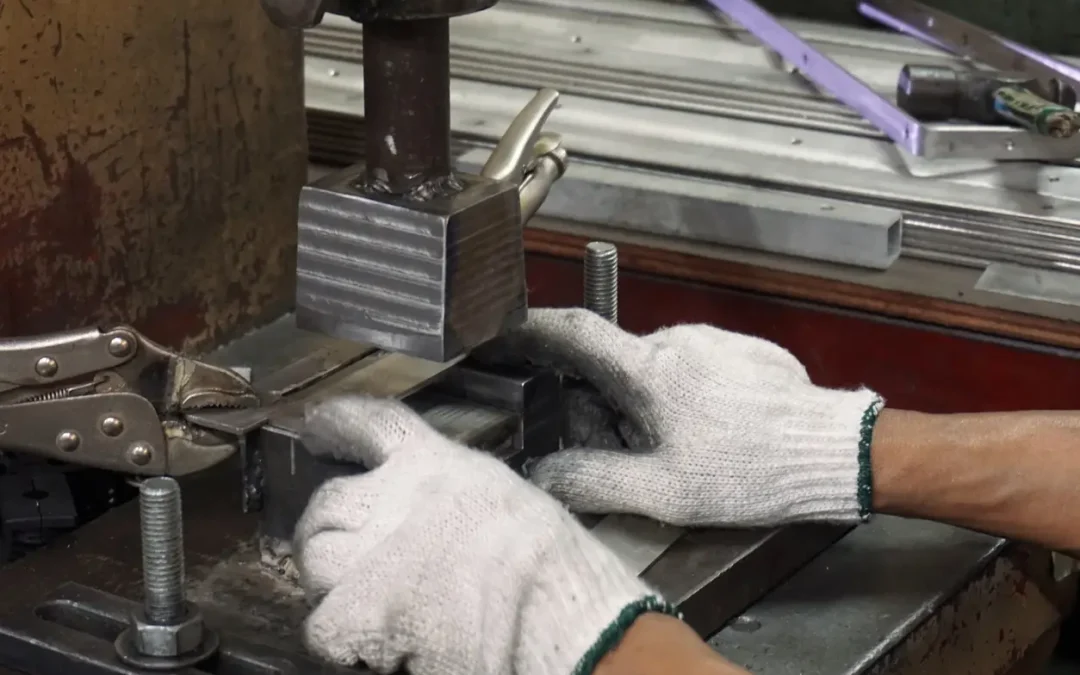
Which Stamping Design Considerations Matter Before Tooling?

Which Stamping Design Considerations Matter Before Tooling?

Here’s something many program managers and purchasers don’t realize. The quality of a stamped metal part depends on just as much on the die as it does on the press. An expertly designed tool runs reliably for years. A poorly built one creates headaches with every run.

That’s why at Jordan Manufacturing handles die-design in house. Read on to discover the stamping design considerations our team evaluates for every project and how they lead to better parts. To learn how we put these principles into practice, speak to a member of our team about our capabilities and equipment.

Process-Focused Dimensions and Tolerances

Tolerances are one of the most important stamping design considerations since how a part is dimensioned not only influences tooling costs; it communicates nonnegotiable requirements to our die builders.

Punches, Pierced, and Blanked Features

A punched edge isn’t perfectly straight. The top portion shears cleanly, while the lower portion fractures and breaks away at a slight angle. Because of that taper, dimensions for these features should reference the sheared edge. For a hole or other inside feature, our team measures at the highest point of the shear. Outside features get measured at their widest point.

If your application can’t tolerate any taper, secondary operations such as shaving can create a straighter edge. This increases overall cost, so it is best reserved for features where edge quality makes a difference in part performance.

Formed Features

Bends introduce additional variables. As a rule, reference dimensions for formed features from the inside surface and account for bend variation when locating features beyond the bend. Each bend has some angular variation, often about one degree in either direction. The farther a hole or tab is from the bend line, the greater the effect on its final position. Tolerance should account for both variables.

Multiple bends add complexity because variation from each bend can accumulate quickly. Referencing critical features to a common datum helps control this stack-up.

Take a Practical Approach

Tight tolerance remains essential for features that affect fit or function. Allow more flexibility elsewhere to maintain part performance and reduce tooling construction and maintenance costs.

Account for Burrs and Edge Conditions

All punched edges have a burr side. Indicating burr direction on your drawing allows us to orient the part so sharp edges land where they cause the least trouble. Will people handle the part by hand? Does it mate against a seal? Note it in the design. Deburring techniques, like tumbling, can always be added, but knowing your application requirements upfront helps minimize overhead.

Simplify Geometry Wherever Possible

While complex geometries are not off limits, simpler is almost always more cost-effective. Sharp internal corners concentrate stress, which accelerates tooling wear, so add small radii wherever possible.

Deep draws may require several forming stages, and narrow tabs or thin webs can tear or buckle. Could a single format component replace a welded assembly? Could two parts become one? Questions like these can unlock significant, but substantial, cost savings.

Call Jordan Manufacturing for More Stamping Design Considerations

Good part design and good die design go hand in hand. When stamping design considerations influence the tooling from day one, parts come out stronger and cost less to produce.

Have a part in mind? Give Jordan Manufacturing a call. Our tool designers review your part requirements and build the die around its exact specifications. Because our capabilities also include running and maintaining that tooling, nothing gets lost in a handoff between facilities. Start the conversation today and for a true manufacturing partnership, not just a transactional job.

The Power of In-House Tooling

The Power of In-House Tooling

At Jordan Manufacturing, we don’t just create high-quality metal parts – we build the tools that make it possible. Our in-house tool room is the beating heart of our operations where precision meets innovation.

Our effective processes allow for:

    • Complete Control: Every step of the tooling process, from initial design to final creation, happens right here at Jordan Manufacturing. This ensures the highest quality standards and eliminates the risk of errors that can occur with third-party involvement.
    • Maximized Uptime: Our dedication to in-house maintenance keeps our tools running smoothly. This translates to minimal downtime and faster turnaround times for your projects.
    • Unmatched Efficiency: By streamlining the entire tooling process under one roof, we eliminate unnecessary steps and delays. This translates to increased efficiency and cost-effectiveness for our clients.
    • Top-Tier Performance: Our team of experienced engineers, designers, and technicians collaborate seamlessly to create and maintain top-notch tooling. This ensures optimal performance and longevity for your parts.

By partnering with Jordan Manufacturing, you gain access to a dedicated team of professionals committed to bringing your vision to life.

Learn More about the value of tooling in this Overview video featuring Jordan Manufacturers President, Justin Johnson.

Ready to experience the power of Jordan’s In-House Tooling? 

Contact us today to discuss your next project! 

A Better Metal Stamping Process Starts With Understanding the Program

A Better Metal Stamping Process Starts With Understanding the Program

A Metal Stamping Process Built Around Long-Term Partnership

In the fast-paced world of business, a strategic and efficient approach to project management is essential for success. At our company, we proudly introduce the “Jordan Process,” a unique business model that transforms the way we work with our customers. This innovative approach breaks down our workflow into three distinct phases, each playing a crucial role in delivering exceptional results and fostering lasting partnerships.

Phase One: The Hard Stuff Behind a Better Metal Stamping Process

The foundation of any successful project lies in meticulous planning and comprehensive understanding. The “Hard Stuff” phase of the Jordan Process is where we invest time and effort into proactively gathering as much information as possible about the program. This includes close collaboration with the customer, asking challenging questions, and delving deep into the intricacies of the project. The goal is to create a detailed quote and a launch plan that not only meet but exceed expectations. This phase is challenging, demanding the utmost cooperation between our team and the customer. However, it is this intensive groundwork that significantly reduces the risk of delays and quality issues, setting the stage for a smooth and successful project.

The Fun Stuff: Bringing the Metal Stamping Process to Life

After laying the groundwork in the “Hard Stuff” phase, we transition into the exhilarating “Fun Stuff.” With the purchase order in hand, we embark on the exciting journey of building and delivering the envisioned parts. This phase is the culmination of the hard work invested in the initial planning, as we witness the tangible fruits of our labor. Delivering parts on-time and to precise specifications, this stage is not just fun for us but also for our clients, who see their ideas transformed into reality. It’s a gratifying moment that reinforces the effectiveness of the Jordan Process and solidifies the trust between our team and the customer.

The Forever Stuff: Because the Metal Stamping Process Doesn’t End at Delivery

The journey doesn’t end with the delivery of parts; instead, it evolves into the “Forever Stuff” phase. This final stage focuses on providing unwavering support to our customers throughout the lifetime of the program. By working diligently to launch the product successfully, we leave a lasting impression on our clients. The support and dedication showcased during the project’s lifecycle create a circular relationship wherein clients remember our commitment and feel a sense of achievement. This, in turn, leads to continued collaboration as clients return with requests for additional work. The “Forever Stuff” phase not only highlights our dedication to long-term partnerships but also solidifies our position as a trusted ally in our clients’ success stories.

The “Jordan Process” is not just a business model; it’s a commitment to excellence, a journey from meticulous planning through the thrill of creation to the enduring support that fosters lasting relationships. This three-phase approach embodies our dedication to delivering quality results and building a foundation for sustained success in the dynamic world of business.

metal stamping process
Three Things to Know When Purchasing Tooling

Three Things to Know When Purchasing Tooling

When it comes to purchasing tooling, there are several important considerations to keep in mind. In this blog post, we will discuss three key factors that can greatly impact your tooling experience. By understanding these factors, you can make informed decisions and minimize potential risks and challenges. 


    1. The Importance of Local Sourcing for Timely Delivery: Foreign-sourced tools may carry additional risks and uncertainties that can jeopardize your project’s timeline. Often, new tools sourced from overseas require time-consuming adjustments to work efficiently in your production environment. This can cause unnecessary stress and delays when every day and week counts. To mitigate these issues, consider purchasing tools locally. Although you might assume that local sourcing is outside your budget, companies like Jordan Manufacturing offer competitively priced tools that are built in-house and ready to run when they leave the toolroom. By opting for locally-sourced tools, you can ensure smoother operations, reduce tooling costs, and meet your project deadlines with confidence.

    2. Design Flexibility for Future Revisions: Design changes are a common occurrence in manufacturing processes. However, if your tool is not built with potential revisions in mind, you may face the need to purchase another tool altogether. This situation can be costly and disruptive to your operations. At Jordan Manufacturing, we prioritize minimizing disruptions for our customers. Our design process includes a thorough discussion about the likelihood and types of revisions that may arise during the lifespan of your project. By designing your tool with flexibility and adaptability in mind, we can help you avoid unnecessary expenses and keep disruptions to a minimum, ensuring a smoother production process in the long run.

      3. Translating Models into Functional Tools: While advancements in computer-aided design software have revolutionized tool design, it is essential to remember that a model is not a part. Although you can create impressive designs quickly using software, the practical considerations for producing a quality part remain unchanged. At Jordan Manufacturing, we have been in the industry since 1949, and our experience has taught us the importance of translating “the perfect model” into a functional tool that meets the required function. Our design process involves close collaboration with customers to ensure that the final tool effectively produces high-quality parts according to the desired specifications. By combining our expertise in tool design with your vision, we can deliver a tool that not only looks good on the screen but also performs optimally in real-world production. 

Purchasing tooling is a critical decision that can significantly impact your manufacturing process. By considering the three factors discussed in this blog post – local sourcing, design flexibility, and translating models into functional tools – you can make informed choices that lead to smoother operations, reduced costs, and improved overall productivity. At Jordan Manufacturing, we understand these considerations and are committed to providing you with programs, tooling and product that meet your budget, minimize disruptions, and deliver the quality and functionality you require. Contact us today to discuss your tooling needs and embark on a successful manufacturing journey.