
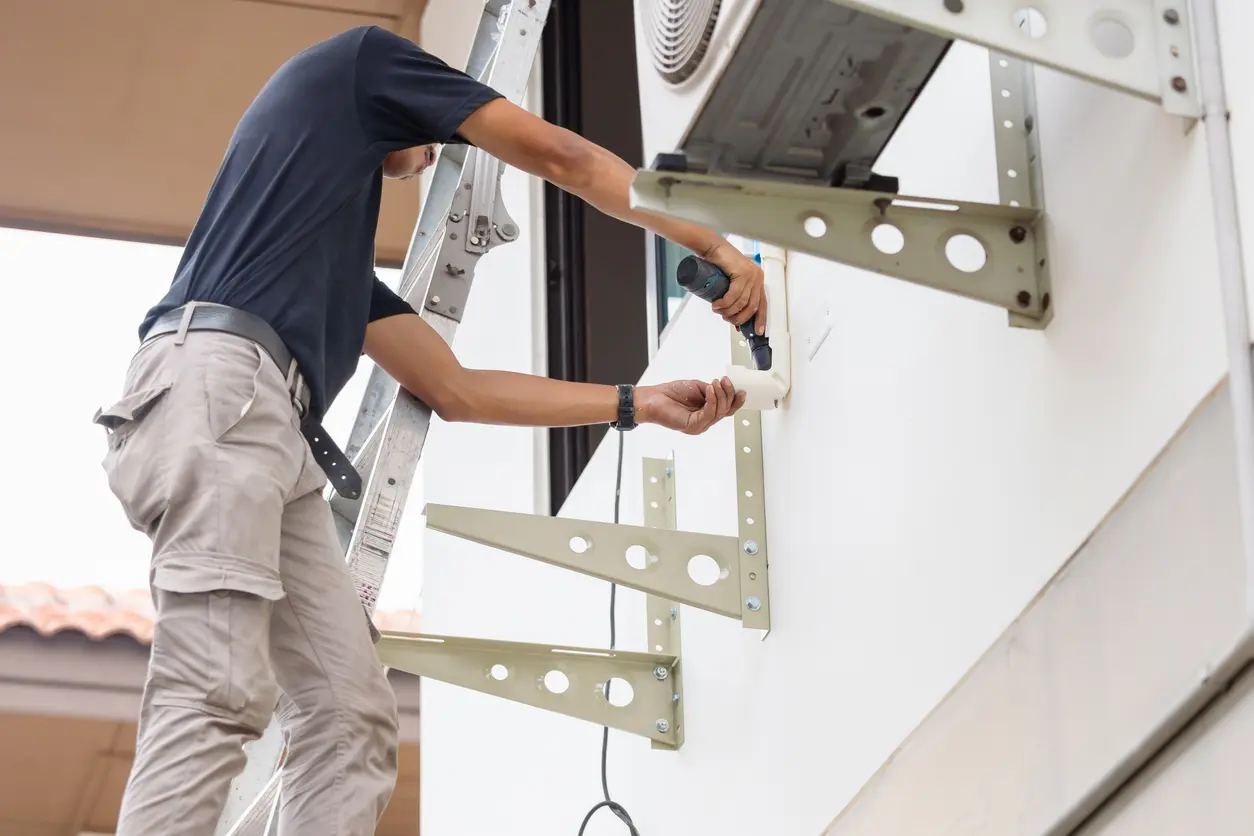
Once an HVAC unit gets installed, its mounting brackets often don’t receive much attention, yet they play a major role in the reliability of the system. They need to be durable enough to support the weight of the unit under continuous vibration and withstand the elements.
For more than 75 years, Jordan Manufacturing has built and maintained die cutters and produced stamped, assembled components such as HVAC mounting brackets. Our years in business have taught us that the best brackets are not the thickest or the ones with complex geometries. They are engineered with the right balance of strength and material efficiency.
If you are about to launch a program and want insights from a tool expert, check out our guide below about designing stamped mounting brackets for HVAC equipment. Reach out to our Michigan headquarters to learn more about our capabilities and equipment or to get started.
Understanding the Load Requirements
Before sketching a flange, our team needs to understand the loads the bracket must support. Static weight is only one factor. Compressor cycling, fan startup, and wind exposure on wall- and roof-mounted units create additional dynamic forces. Our design accounts for these stresses to prevent cracking along the bend line.
Material Selection for HVAC Mounting Brackets
There are four core materials that Jordan Manufacturing uses to stamp HVAC mounting brackets. Mild steel is the cost-effective workhorse for most applications, especially when it’s covered with a protective coating. High-strength steel works better for heavier loads at thinner gauges. Stainless steel is well-suited for corrosive environments like coastal regions. Although aluminum is naturally resistant to corrosion, it is not often used for mounting brackets due to its lower load ratings.
Gauge is an important factor as well. A gauge that it is too heavy adds unnecessary cost to each assembly, but one that is too light can lead to fatigue failures. Rest assured, Jordan Manufacturing will work with you to find the right balance for your application.
Design Considerations for Critical Bracket Features
CAD models for HVAC mounting brackets don’t automatically translate a flawless final assembly. That is why we review every design with our customers before the tool gets made. Our focus is on key areas such as:
- Bend radius: We often recommend an inside bend radius that is at least equal to the thickness of the material. If a design requires a tighter radius, we flag the cracking risk and collaborate with you on an alternative.
- Hold placement: Holes too close to a bend line can stretch into an oval shape during forming. If we notice this in a client’s design, we recommend refining it so that the edge of each hole is at least 2.5 times the material thickness plus the bend radius away. If an application requires a hole closer than that, we can pierce it after forming.
- Flange length: Extremely short flanges are difficult to form consistently, which is why we advise on a minimum of roughly four times the material thickness, adjusting the geometry if space is tight.
- Bend relief: HVAC mounting bracket designs sometimes arrive at our facility without relief cuts where bends meet the edges. Small notches in those areas prevent tearing, so this is one of the first adjustments we usually propose.
- Stiffness features: Clients will occasionally ask us about switching to a heavier gauge for more rigidity. Before going that route, we typically recommend embossed ribs or formed gussets to add strength without adding unnecessary material costs.
Build Better Brackets with Jordan Manufacturing
HVAC mounting brackets that provide years of reliable performance are born out of precision engineering and design collaboration. When engineers involve stamping specialists early in the development stage, it not only ensures the manufacturability of the brackets, but can also reduce overall project costs.
Jordan Manufacturing has over seventy years of metal stamping experience. Our capabilities include designing, building, and maintaining every die, along with providing assembly services. Get in touch with us today to have your drawings reviewed for potential improvements before tooling begins.